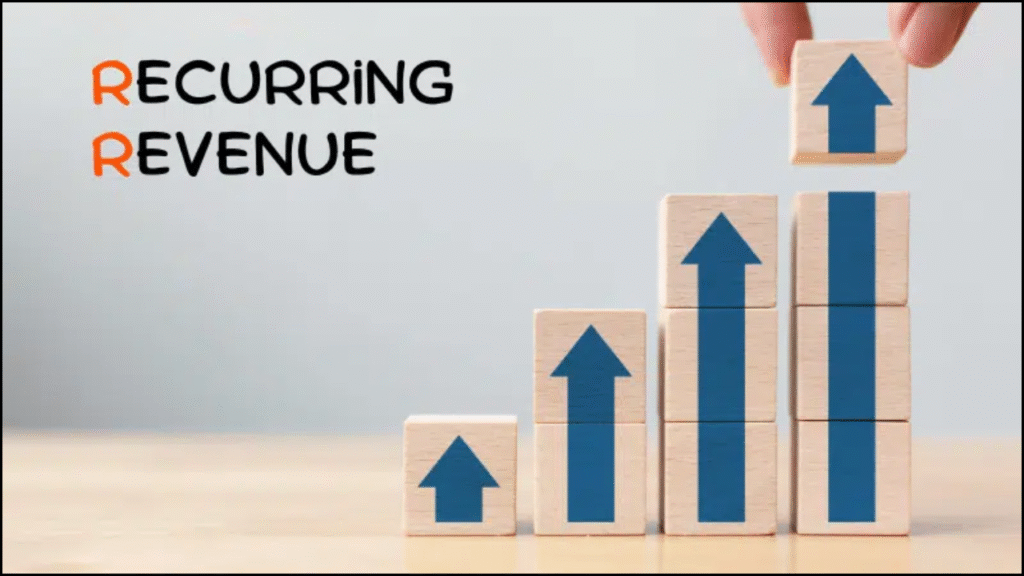
Recurring revenue serves as the financial backbone of modern business models, offering entrepreneurs stability, predictability, and long-term growth opportunities. Unlike one-time transactions, recurring revenue ensures a steady stream of income through repeat payments from customers over time. For entrepreneurs aiming to build scalable and sustainable ventures, mastering the concept of recurring revenue is essential. It transforms uncertain cash flow into a predictable system that promotes strategic planning, customer loyalty, and business resilience.
Table of Contents
What Is Recurring Revenue?
Recurring revenue refers to the consistent income a business earns from customers who pay periodically — weekly, monthly, quarterly, or annually — for continued access to products or services. This income model focuses on long-term customer relationships instead of single sales, providing financial predictability and fostering stability. It is commonly used in industries such as software, entertainment, education, e-commerce, and professional services.
Key Features of Recurring Revenue
- Predictability: Revenue is consistent and forecastable from one billing cycle to the next.
- Customer Retention: Focus is on maintaining long-term relationships.
- Automation: Billing and renewals are often handled through automated systems.
- Scalability: Revenue grows with new subscriptions or memberships.
- Sustainability: Reliable income cushions businesses during economic fluctuations.
Types of Recurring Revenue Models
| Type | Description | Common Examples |
|---|---|---|
| Subscription Model | Customers pay recurring fees to access a product or service. | Streaming platforms, software services, and gyms |
| Membership Model | Members pay for exclusive access or privileges. | Clubs, co-working spaces, online learning groups |
| Usage-Based Model | Revenue depends on the amount of product or service used. | Cloud storage, utilities, communication plans |
| Retainer Model | Clients pay a fixed monthly fee for ongoing services. | Marketing agencies, legal or IT consultants |
| Product Replenishment Model | Items are automatically reordered and delivered regularly. | Coffee subscriptions, grooming kits, groceries |
| Freemium to Premium Model | Users upgrade to paid plans for additional features. | Mobile apps, SaaS tools, digital services |
Why Recurring Revenue Matters for Entrepreneurs
| Benefit | Explanation |
|---|---|
| Predictable Cash Flow | Regular payments simplify financial planning and forecasting. |
| Higher Customer Lifetime Value (CLV) | Long-term users generate more income over time. |
| Business Stability | Recurring income protects against market volatility. |
| Simplified Growth Strategy | Adding new subscribers gradually increases revenue. |
| Investor Appeal | Predictable earnings attract investors and funding opportunities. |
| Customer Insights | Recurring interactions provide valuable behavioral data. |
How Recurring Revenue Differs from One-Time Sales
| Aspect | One-Time Sales | Recurring Revenue |
|---|---|---|
| Customer Relationship | Short-term interaction | Long-term engagement |
| Revenue Predictability | Unstable and variable | Stable and forecastable |
| Marketing Costs | High for constant acquisition | Lower through retention |
| Cash Flow | Irregular | Consistent |
| Customer Feedback | Limited | Continuous |
| Business Scalability | Slower due to dependency on new buyers | Easier through recurring renewals |
Steps to Build a Recurring Revenue Model
Step 1 – Identify Suitable Offerings
- Choose products or services customers use frequently.
- Ensure consistent value that motivates long-term commitment.
Step 2 – Choose the Right Model
- Decide which subscription, membership, or retainer model best fits.
- Align pricing and structure with your target audience’s needs.
Step 3 – Design Attractive Pricing Plans
- Offer tiered options (basic, standard, premium).
- Provide flexible billing cycles and discounts for long-term commitments.
Step 4 – Implement a Reliable Payment System
- Use automated billing solutions like Stripe, Razorpay, or PayPal.
- Ensure secure and transparent transactions.
Step 5 – Deliver Continuous Value
- Keep customers engaged through updates, rewards, or new content.
- Use feedback to refine offerings and maintain satisfaction.
Step 6 – Focus on Customer Retention
- Provide responsive customer support.
- Offer loyalty benefits and referral incentives.
Step 7 – Track and Optimize Performance
- Use data analytics to measure churn, CLV, and revenue growth.
- Make adjustments based on trends and user behavior.
Essential Metrics to Track Recurring Revenue
| Metric | Meaning | Why It Matters |
|---|---|---|
| Monthly Recurring Revenue (MRR) | Total predictable income generated each month | Reflects consistent financial health |
| Annual Recurring Revenue (ARR) | MRR multiplied by 12 months | Shows long-term revenue potential |
| Customer Lifetime Value (CLV) | Total revenue a customer generates during their subscription | Indicates profitability per customer |
| Customer Acquisition Cost (CAC) | Average cost of gaining a new subscriber | Helps measure marketing efficiency |
| Churn Rate | Percentage of customers who cancel | Reveals customer satisfaction and loyalty |
| Net Revenue Retention (NRR) | Compares current recurring revenue with past performance | Measures growth from existing customers |
Examples of Businesses Leveraging Recurring Revenue
| Business | Industry | Revenue Model | Key Benefit |
|---|---|---|---|
| Netflix | Entertainment | Monthly subscription | Predictable and scalable global income |
| Adobe | Software | SaaS subscriptions | Transitioned from product sales to recurring services |
| Dollar Shave Club | Grooming | Monthly replenishment | Enhanced brand loyalty and convenience |
| Patreon | Content Creation | Membership-based revenue | Empowered creators with consistent income |
| Amazon Prime | Retail | Annual membership | Combined multiple services for customer retention |
Common Challenges in Managing Recurring Revenue
| Challenge | Description | Possible Solution |
|---|---|---|
| High Churn Rates | Customers are canceling subscriptions frequently. | Improve user experience and engagement. |
| Payment Failures | Missed renewals due to billing errors. | Use automated retry systems and reminders. |
| Pricing Pressure | Competitors offering cheaper alternatives. | Focus on value-added services. |
| Customer Fatigue | Subscribers are losing interest over time. | Refresh content or product selection regularly. |
| Operational Complexity | Managing renewals, upgrades, and downgrades. | Invest in subscription management software. |
How Entrepreneurs Can Maximize Recurring Revenue Potential
- Focus on Retention: Keeping existing subscribers is more cost-effective than acquiring new ones.
- Encourage Annual Subscriptions: Offer discounts to promote long-term commitments.
- Cross-Sell and Upsell: Introduce complementary services or products to existing users.
- Offer Personalized Experiences: Use customer data to tailor services or recommendations.
- Reward Loyalty: Implement programs that recognize and reward long-term subscribers.
Technology Tools Supporting Recurring Revenue Systems
| Tool Category | Examples | Purpose |
|---|---|---|
| Subscription Management Software | Recurly, Chargebee, Zoho Subscriptions | Automates billing, renewals, and analytics |
| Customer Relationship Management (CRM) | HubSpot, Salesforce, Zoho CRM | Manages interactions and improves retention |
| Payment Platforms | PayPal, Stripe, Razorpay | Enables secure and recurring billing |
| Analytics Tools | Google Analytics, Baremetrics | Tracks revenue trends and customer behavior |
| Marketing Automation Tools | Mailchimp, ActiveCampaign | Keeps subscribers engaged and informed |
Benefits of Recurring Revenue for Business Growth
- Financial Predictability: Consistent revenue allows better resource allocation.
- Lower Risk: Regular payments mitigate the impact of market downturns.
- Customer Loyalty: Continuous engagement leads to deeper trust.
- Scalable Expansion: Businesses can grow by acquiring new subscribers without large upfront costs.
- Investor Confidence: Stable income streams attract potential investors.
Future Trends in Recurring Revenue Models
| Trend | Description |
|---|---|
| Micro-Subscriptions | Affordable plans for specific niche audiences. |
| Personalized Plans | AI-driven customization for individual users. |
| Community-Based Revenue | Platforms built around shared interests or memberships. |
| Sustainable Subscriptions | Eco-conscious models focusing on responsible consumption. |
| Hybrid Models | Blending product, service, and digital offerings for diverse income streams. |
Looking Ahead
Recurring revenue provides entrepreneurs with the foundation to build resilient and customer-centered businesses. This model replaces unpredictable one-time sales with consistent income, enabling entrepreneurs to plan strategically, innovate continuously, and grow sustainably. By focusing on retention, personalization, and value creation, startups and established ventures alike can secure long-term profitability. Understanding and implementing recurring revenue strategies is not just a financial tactic—it is a roadmap to enduring success in an increasingly competitive business world.