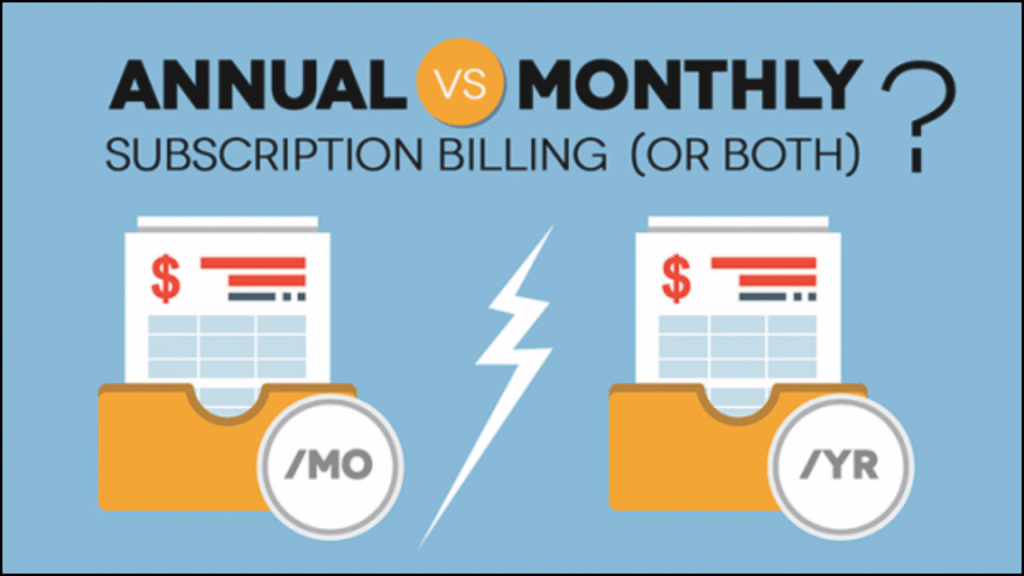
A subscription-based model gives businesses predictable income and stronger customer relationships. However, deciding between monthly and annual subscription options is not just a pricing decision—it directly affects cash flow, customer retention, and perceived value. A clear understanding of how each model operates helps entrepreneurs select the right structure for their target audience and long-term goals.
Table of Contents
Understanding the Subscription Duration Concept
A subscription duration defines how long a customer pays to access a service or product.
- Monthly subscriptions involve recurring payments every month and provide flexibility.
- Annual subscriptions require upfront payment for a full year and often include discounts.
The right choice depends on product type, customer preferences, and business strategy.
Key Factors Influencing the Choice
- Customer Budget and Commitment – Monthly plans attract customers with lower upfront costs, while annual plans suit those ready for a long-term relationship.
- Cash Flow Requirements – Businesses seeking stable, immediate cash prefer annual subscriptions for quick capital.
- Product Lifecycle – Services that evolve or update monthly fit short-term billing better; stable offerings favor yearly billing.
- Churn Risk – Monthly plans face higher cancellation rates compared to long-term commitments.
- Marketing Strategy – Annual plans often serve as loyalty-building tools, while monthly plans are ideal for trial-based customer acquisition.
Comparing Monthly vs. Annual Subscriptions
| Feature | Monthly Subscription | Annual Subscription |
|---|---|---|
| Payment Frequency | Recurring every month | Once per year |
| Customer Flexibility | High – users can cancel anytime | Low – users commit for a year |
| Revenue Predictability | Moderate, depends on renewals | High, upfront lump sum |
| Customer Retention | Lower, due to easier cancellation | Higher, due to long-term lock-in |
| Cash Flow Impact | Regular but smaller inflows | Immediate larger inflow |
| Discount Potential | Usually full price | Often includes discounts (5–30%) |
| Customer Type | New or budget-conscious | Loyal or committed |
| Ideal For | Testing, trials, and early-stage products | Established services with proven value |
Benefits of Monthly Subscriptions
- Accessibility for Customers – Low entry cost encourages more sign-ups.
- Continuous Feedback – Frequent renewals offer regular customer engagement.
- Scalability – Easier to modify pricing or features based on usage trends.
- Improved Conversion Rates – Shorter commitment builds trust among first-time users.
Challenges of Monthly Subscriptions
- High Churn Rates – Customers may cancel after short usage periods.
- Administrative Workload – More frequent billing and payment tracking.
- Uncertain Cash Flow – Monthly payments can fluctuate depending on renewals.
Benefits of Annual Subscriptions
- Better Revenue Predictability – Upfront payments provide strong financial stability.
- Reduced Churn – Customers stay longer due to yearly commitments.
- Stronger Customer Relationships – Long-term users develop greater brand loyalty.
- Cost Efficiency – Less administrative effort for billing and collections.
Challenges of Annual Subscriptions
- High Entry Cost – Some customers may hesitate to pay upfront.
- Reduced Flexibility – Customers locked into plans may feel less control.
- Refund Complexity – Early cancellations complicate accounting and policy management.
How Business Type Affects the Decision
| Business Type | Recommended Plan | Reason |
|---|---|---|
| Software as a Service (SaaS) | Annual | High customer retention and predictable updates |
| Streaming or Digital Content | Monthly | Users prefer flexibility for entertainment services |
| Fitness or Wellness Programs | Monthly | Customers may test before committing long-term |
| Educational Platforms | Annual | Students benefit from one-time access throughout the course |
| Subscription Boxes (Physical Goods) | Monthly | Product variety encourages continuous engagement |
Customer Psychology in Subscription Choices
Customer perception plays a major role in how plans are chosen:
- Monthly plans reduce financial hesitation, helping customers “try before they trust.”
- Annual plans create a sense of long-term value through savings and commitment.
- Businesses often use dual pricing strategies to influence customer choice by showing how much can be saved with a yearly plan.
Pricing Strategy Tips for Businesses
- Use Incentives: Offer one or two free months for annual commitments.
- Communicate Value Clearly: Highlight cost savings and exclusive features for yearly subscribers.
- Provide Trial Options: Allow customers to test the service before upgrading to an annual plan.
- Monitor Retention Metrics: Analyze churn data to see which plan yields higher lifetime value.
- Adjust Based on Market Response: Periodically test different pricing structures.
Real-World Examples
| Company | Plan Strategy | Outcome |
|---|---|---|
| Netflix | Monthly | Encourages flexibility and easy entry for users |
| Adobe Creative Cloud | Annual (with monthly billing option) | Combines commitment with manageable payments |
| Spotify | Monthly and Annual | Dual options increase conversions and retention |
| Canva Pro | Annual preferred | Offers discounts and loyalty rewards for yearly subscribers |
Hybrid Approach: Combining Monthly and Annual Options
Many modern businesses adopt a hybrid model to balance accessibility and commitment.
- New customers start with a monthly plan to build trust.
- Once the value is proven, they are encouraged to switch to an annual plan through targeted promotions.
This structure creates flexibility for users while ensuring long-term stability for the company.
Key Metrics to Track for Decision Making
| Metric | Definition | Purpose |
|---|---|---|
| Customer Lifetime Value (CLV) | Average revenue per user over the subscription period | Evaluates profitability of each plan |
| Churn Rate | Percentage of customers who cancel | Identifies plan sustainability |
| Average Revenue per User (ARPU) | Revenue generated per active subscriber | Assesses pricing effectiveness |
| Renewal Rate | Share of users who continue subscription | Reflects satisfaction and loyalty |
| Cash Flow Stability | Consistency of inflows over time | Supports financial planning |
Moving Forward
A subscription duration decision shapes customer relationships and business stability. Monthly plans offer flexibility and faster adoption, while annual plans ensure steady cash flow and deeper loyalty. A combination of both often serves diverse audiences effectively. Businesses that analyze customer behavior, measure retention data, and align subscription durations with long-term goals can achieve consistent growth and profitability in today’s subscription-driven economy.