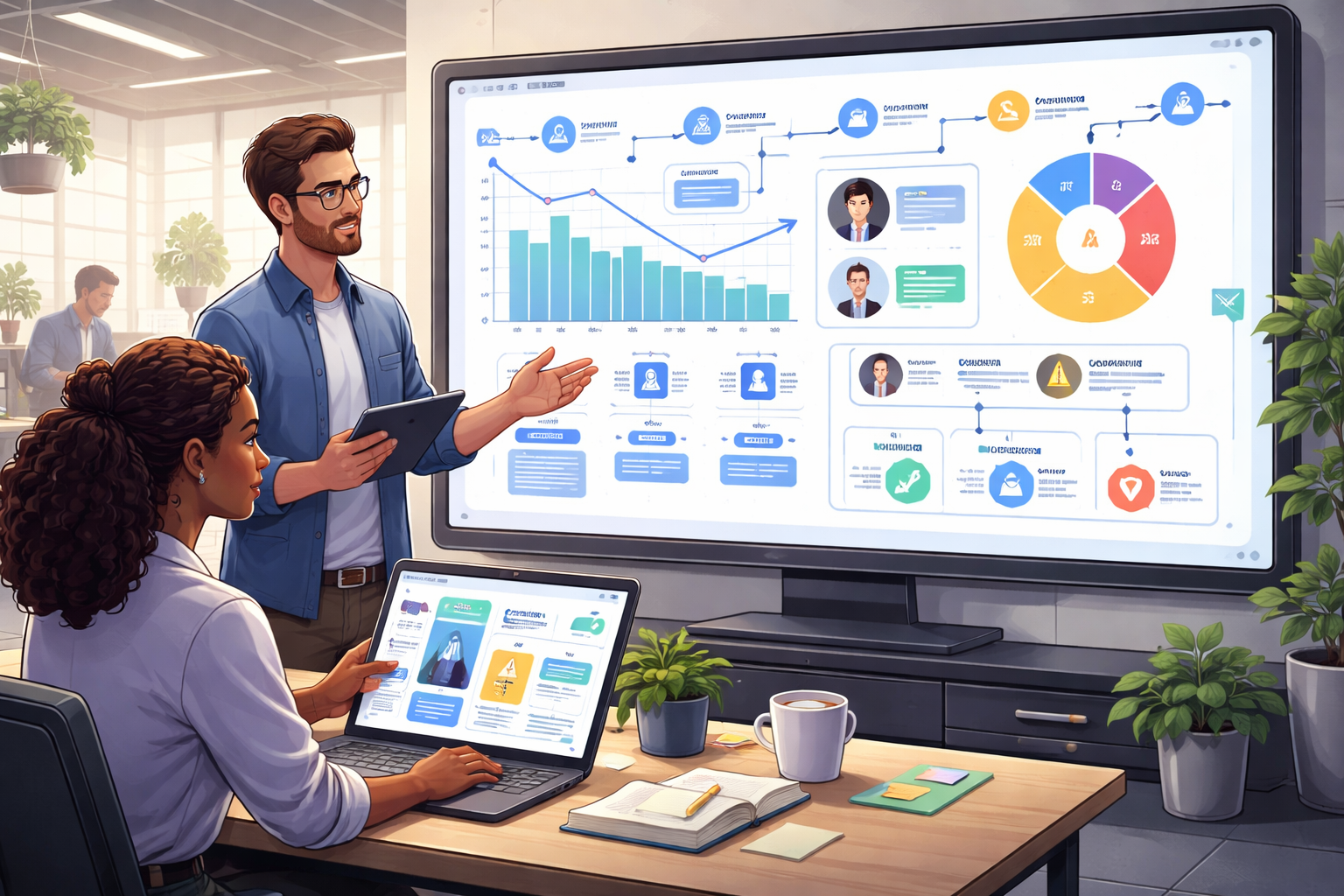
Modern subscription businesses rely heavily on continuous customer engagement rather than one-time transactions. Data-driven personalization has emerged as a powerful approach to improve retention, increase lifetime value, and create meaningful user experiences. By leveraging CRM insights, companies can better understand customer behavior and tailor interactions accordingly.
Growing competition in subscription models makes personalization not just a strategy but a necessity. Businesses that effectively use data analytics within CRM systems can anticipate customer needs, reduce churn, and build long-term loyalty. This article explores how CRM-driven personalization enhances retention and drives sustainable growth.
Table of Contents
Overview Snapshot
| Aspect | Details |
|---|---|
| Concept | Data-driven personalization using CRM insights |
| Objective | Improve retention and customer lifetime value |
| Core Tools | CRM platforms, analytics engines, AI models |
| Key Benefit | Higher engagement and reduced churn |
| Application | Subscription-based digital and service businesses |
Data Foundations
Reliable data forms the backbone of any personalization strategy. Subscription businesses collect vast amounts of customer data, including behavioral patterns, purchase history, engagement frequency, and feedback. CRM systems act as centralized hubs where this data is stored, organized, and analyzed to generate actionable insights.
Structured and clean data enables accurate segmentation and targeting. Without proper data governance, personalization efforts may become inconsistent or misleading. Businesses must ensure data accuracy, integration across channels, and real-time updates to maintain effective personalization strategies that align with customer expectations.
Customer Segmentation
Customer segmentation allows businesses to divide their user base into meaningful groups based on shared characteristics. CRM tools help categorize users using factors such as demographics, behavior, preferences, and subscription usage patterns. This segmentation ensures that marketing and communication strategies are more relevant and impactful.
- Behavioral segmentation based on usage frequency and activity
- Demographic grouping for targeted messaging
- Lifecycle segmentation, such as new, active, and at-risk users
- Value-based segmentation focusing on high-value subscribers
Effective segmentation improves communication precision and enhances customer satisfaction. It allows businesses to deliver personalized content, offers, and recommendations that resonate with each group, ultimately increasing retention rates.
Personalization Strategies
Personalization goes beyond simply addressing customers by their names. It involves delivering tailored experiences across multiple touchpoints, including emails, in-app messages, recommendations, and customer support interactions. CRM insights enable businesses to create dynamic and context-aware experiences for each subscriber.
- Personalized onboarding journeys for new users
- Customized content recommendations based on past behavior
- Trigger-based communication, such as renewal reminders
- Dynamic pricing or offers based on engagement levels
These strategies ensure that customers feel valued and understood. When personalization aligns with user expectations, it increases engagement, builds trust, and encourages long-term subscription continuity.
Predictive Analytics
Predictive analytics enhances personalization by forecasting future customer behavior. Using historical CRM data, businesses can identify patterns and predict churn risks, upsell opportunities, and engagement trends. This proactive approach allows companies to intervene before issues escalate.
Advanced algorithms and machine learning models analyze customer interactions to generate predictive insights. Businesses can then design targeted campaigns, such as retention offers or re-engagement strategies, to address potential churn. Predictive analytics transforms CRM systems from reactive tools into proactive decision-making platforms.
Automation Systems
Automation plays a critical role in scaling personalization efforts. CRM platforms integrate automation tools that trigger actions based on predefined conditions. This ensures timely and consistent communication without manual intervention, improving efficiency and responsiveness.
Automation also reduces operational costs while maintaining a high level of personalization. Businesses can set up workflows for onboarding, engagement tracking, renewal notifications, and feedback collection. These automated systems ensure that every customer interaction is timely, relevant, and aligned with their behavior.
Retention Metrics
Tracking the right metrics is essential to evaluating the success of personalization strategies. CRM systems provide detailed analytics that help businesses measure performance and identify areas for improvement. Retention-focused metrics offer insights into customer satisfaction and loyalty.
Key Retention Indicators
| Metric | Description |
|---|---|
| Churn Rate | Percentage of customers who cancel subscriptions |
| Customer Lifetime Value | Total revenue generated per customer |
| Engagement Rate | Frequency of user interactions |
| Renewal Rate | Percentage of customers renewing subscriptions |
| Net Promoter Score | Customer satisfaction and loyalty indicator |
Monitoring these metrics enables businesses to refine their personalization strategies continuously. Data-driven adjustments ensure that retention efforts remain effective and aligned with evolving customer needs.
Privacy Considerations
While personalization offers significant benefits, it also raises concerns about data privacy and security. Customers expect transparency in how their data is collected, stored, and used. Subscription businesses must prioritize ethical data practices to maintain trust and compliance with regulations.
Implementing strong data protection measures and clear privacy policies is essential. Businesses should provide customers with control over their data and ensure compliance with global standards. Balancing personalization with privacy builds credibility and strengthens long-term customer relationships.
Final Thoughts
Data-driven personalization powered by CRM insights has become a cornerstone of successful subscription businesses. By leveraging customer data effectively, companies can deliver tailored experiences that enhance engagement and reduce churn. The integration of segmentation, predictive analytics, and automation creates a seamless and personalized customer journey.
Sustainable growth in subscription models depends on continuous adaptation and innovation. Businesses that invest in advanced CRM capabilities and ethical data practices will be better positioned to retain customers and build lasting relationships. Personalization is no longer optional—it is a strategic necessity for long-term success.